Grocery shopping can feel overwhelming, but a healthy grocery list makes it easier to shop smart, save money, and stay on track with your health goals. An ideal grocery list balances key food groups, including proteins, healthy fats, whole grains, fruits, vegetables, and fun “extras” like your favorite beverages and snacks. Whether you’re shopping for quick meals, meal prep, or balanced snacks, this guide will help you build a nutritionist-approved grocery list — stress-free.
- Mindful grocery lists improve nutrition quality by increasing fiber, antioxidants, and lean protein intake.
- Creating a grocery list can save money by reducing impulse purchases and takeout.
- Organizing foods by category enhances shopping efficiency and encourages a balanced cart.
- Planning meals ahead helps buy intentional ingredients and decreases reliance on processed foods.
- Choosing fresh, whole foods supports overall health and minimizes food waste.
Bonus: Save our free printable grocery list template to simplify your next shopping trip!
Why a Grocery List Matters for Healthy Eating
You’ve probably heard the saying “You are what you eat.” But really, you are what you stock. If your kitchen is filled with balanced, nutrient-dense options, that’s what you’ll reach for most often. Building a mindful grocery list can help you:
- Improve your nutrition quality (higher intake of fiber, antioxidants, lean protein)
- Save money (reducing impulse takeout and packaged food purchases)
- Minimize food waste
- Support consistent meal planning, which research shows improves diet quality and long-term weight management.
Studies also suggest that shopping with a list can lower the risk of high BMI and improve grocery spending efficiency.
How to Structure Your Grocery List for Success
Here are a few RD-approved tips for optimizing your grocery list!
- Organize by food category – Grouping foods (produce with produce, dairy with dairy) not only saves time but also encourages a balanced cart. This makes shopping faster and easier, ensuring you won’t forget anything.
- Prioritize whole, nutrient-dense foods – These are the building blocks of a great meal or snack. Having whole foods in your home ensures you’re eating more nutrient-dense options versus processed items. So focus your shopping on fresh produce, proteins, and whole grains.
- Plan meals ahead of time – Having 2–3 simple meal ideas before shopping helps you buy intentional ingredients and avoid last-minute, processed food purchases. Before shopping, browse for a few recipes you’re excited to make on a given week, so you know what you need before you go.
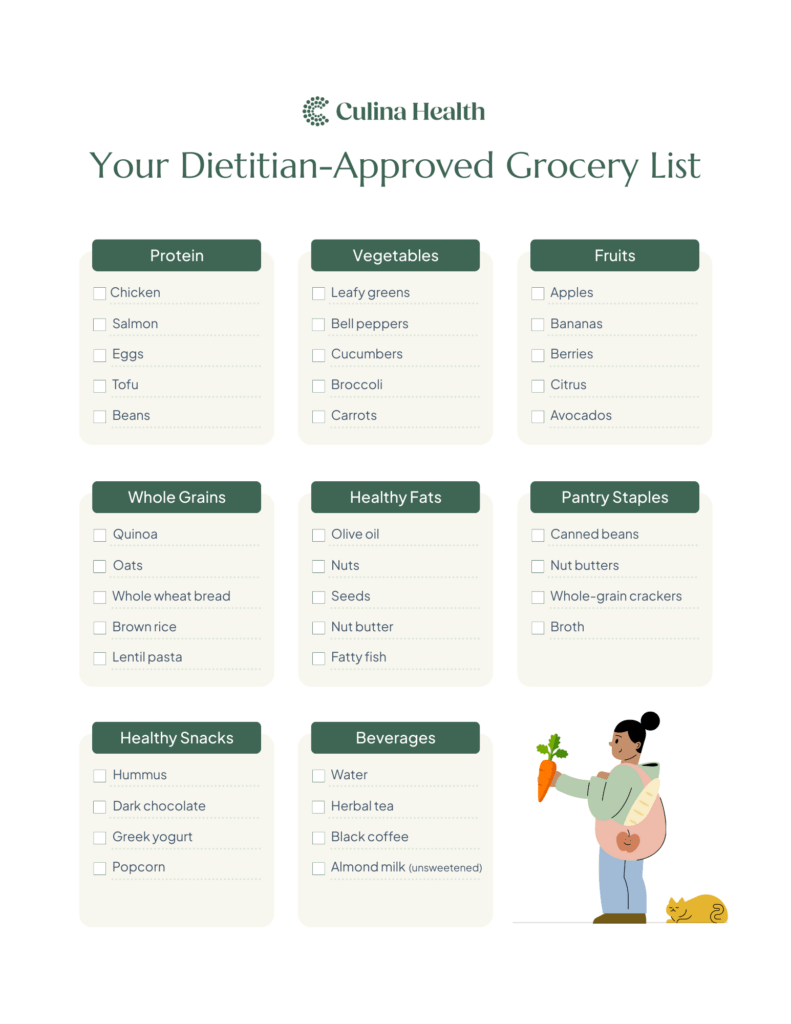
Dietitian-Approved Healthy Grocery List Template
Use this as your starting point and customize it based on your lifestyle and preferences to create your personalized grocery list.
- Protein 🥩🍗 → Chicken, salmon, eggs, tofu, beans, Greek yogurt
- Vegetables 🥦🥕 → Leafy greens, bell peppers, cucumbers, broccoli, carrots
- Fruits 🍎🍌 → Apples, bananas, berries, citrus, avocados
- Whole Grains 🌾🍞 → Quinoa, oats, whole wheat bread, brown rice, lentil pasta
- Healthy Fats 🥑🥜 → Olive oil, nuts, seeds, nut butter, fatty fish
- Pantry Staples 🥫🌰 → Canned beans, nut butters, whole-grain crackers, broth
- Healthy Snacks 🥜🍫 → Hummus, dark chocolate, Greek yogurt, popcorn
- Beverages ☕💧 → Water, herbal tea, black coffee, unsweetened almond milk
Pro Tip: Choosing more plant-based proteins and seasonal produce can support your health, your budget, and the planet.
Tips for Making Healthier Choices at the Grocery Store
Here are a few RD-approved tips to promote healthy grocery shopping habits and stay on track with your health goals.
- Stick to the perimeter – Fresh foods (produce, dairy, protein) are usually along the perimeter. Packaged and ultra-processed foods are often stocked in the center aisles.
- Read ingredient labels – Learning to read a nutrition label will go a long way in helping you make more informed choices at the store. Look for minimal ingredients and whole foods, versus long ingredient lists, chemicals, and dyes. A recent review highlights that diets high in ultra-processed foods (UPFs) are linked to higher risks of obesity, metabolic syndrome, and depression.
- Avoid shopping while hungry – Shopping while hungry has been associated to lead to higher purchases of calorie-dense, less nutritious foods. Eat a small snack before heading to the store. Coming into the store with a clear, calm mind will help you ensure you get what you need.
- Opt for frozen or canned produce. Frozen fruits and vegetables retain their nutrients well and offer an affordable way to increase fiber, antioxidants, and vitamins year-round.
How to Adapt Your Grocery List for Different Diets
Gluten-Free
Swap whole wheat items for quinoa, rice, and certified gluten-free oats.
Plant-Based
Prioritize legumes, tofu, nuts, seeds, and fortified plant-based milks (for B12, Vitamin D, and calcium).
Low-Carb/Keto
Focus on proteins, healthy fats, and non-starchy veggies like leafy greens, broccoli, zucchini, and cauliflower.
Mediterranean-Inspired
Load up on olives, olive oil, fatty fish, tomatoes, herbs, legumes, and whole grains like farro or bulgur.
Bonus: Healthy Grocery List for Busy People
No time? No problem. Keep these on hand for easy, balanced meals and snacks:
- Quick Proteins → Pre-cooked chicken, tuna packets, hard-boiled eggs
- Easy Veggies → Pre-chopped salad mixes, baby carrots, frozen stir-fry veggies
- On-the-Go Snacks → Greek yogurt cups, nuts, protein bars, fruit
- Simple Whole Grains → Instant oats, whole-wheat wraps, brown rice packs
Pro tip: Batch cook a few items (like grilled chicken, quinoa, roasted veggies) to mix and match throughout the week.
The Bottom Line
A well-planned grocery list is one of the easiest, most effective tools for improving your nutrition, saving money, and reducing mealtime stress. Start with our list above—or create your own! And if you want personalized help building a list tailored to your needs, book a session with a Culina Health dietitian today.