
- Fats are a vital macronutrient essential for brain function, organ protection, and absorption of vitamins A, D, E, and K.
- Healthy unsaturated fats support heart and brain health, while saturated fats should be consumed in moderation.
- Trans fats are harmful and should be avoided due to their association with heart disease and other health risks.
- Omega-3 fatty acids improve brain functionality and have protective effects against mental fatigue and depressive symptoms.
- Including a variety of healthy fats in the diet can contribute to overall well-being and heart health.
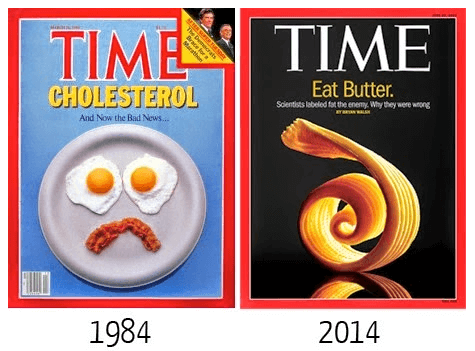
These contrasting Time covers are a small reminder of all the ways fat has been misunderstood over the years. It’s no surprise there is confusion about how much and what kinds of fat to eat!
Research continues to reveal that fats are essential to our health. Let’s take a closer look at the different types of fat, their critical roles in the body, and the latest research on selecting beneficial sources.
Fat 101
Alongside carbohydrates and proteins, fat is one of three main macronutrients the body needs to function.
Fat is essential for proper brain function, insulation and protection of critical organs, and absorption of fat soluble vitamins A,D,E, and K.
But not all fats are created equal! Here’s a quick guide:
| Eat these every day | Unsaturated fats (AKA “healthy fats”; support heart and brain health) – Monounsaturated fats found in olives and olive oil, avocados and avocado oil, nuts and nut oils – Polyunsaturated fats can contain essential omega-3 and omega-6 fatty acids. Found in fatty fish, leafy green vegetables, eggs, legumes, walnuts, canola oil, sunflower seeds, wheat germ, and flaxseed. |
| Enjoy in moderation | Saturated fats Found in red meat, full-fat dairy, coconut oil, and some processed foods When consumed in high amounts, may cause an increase in LDL (“bad”) cholesterol |
| Avoid | Trans fats Found in some processed and packaged foods Linked to increased heart disease risk |
Fats: Myth or Fact?
Let’s bust some common myths about fat.
“Eating fat makes you fat.”
❌ False. Healthy fats can actually support weight management by increasing satiety.
“All saturated fat is bad.”
❌ False. While saturated fat can raise LDL (bad) cholesterol, recent research suggests that the length of the fatty acid chain may be more important for heart health than simply whether a fat is saturated or unsaturated. Some saturated fat-containing foods, like cheese, have even been associated with reduced cardiovascular risk in certain studies—highlighting that the food source, not just the fat type, matters.
“Low-fat diets are healthiest.”
❌ False. Low-fat diets often lead to higher sugar and carb intake. Balanced fat intake is key for long-term health.
“Fat-free foods are better for you.”
❌ False. These are often highly processed and loaded with added sugars or thickeners to replace the flavor and texture qualities of fat.
“Avocados and nuts are too high in fat to be healthy.”
❌ False. These are nutrient-dense sources of unsaturated fats, fiber, and vitamins — and linked to better heart health.
“You need fat to absorb certain vitamins.”
✅ True. Vitamins A, D, E, and K require dietary fat for proper absorption.
“Trans fats are banned, so they’re not a concern anymore.”
❌ Partially false. While largely banned in the US, small amounts can still show up in imported or processed food. Check the label for “partially hydrogenated oils.”
Fats and Brain Health
Did you know that at least 60% of the brain’s dry weight is made up of fat? The type of fat you eat can directly affect how well your brain functions. Here’s what the research says:
🧠 Omega-3s are brain MVPs
Long-chain omega-3 fatty acids (especially DHA) are critical for brain structure, especially in areas responsible for memory and learning.
🧠 Fats support communication between brain cells
Healthy fats help maintain the structure, speed, and efficiency of brain cell communication.
- Cell membrane structure: fatty acids keep the membranes around each neuron flexible and fluid, which is essential for receptors and signaling molecules to move and function properly during communication between cells.
- Myelin sheath formation: fat is a major component of the myelin sheath, a fatty coating that wraps around nerve fibers. This acts like insulation on a wire, allowing electrical signals to travel quickly and efficiently between brain cells.
- Neurotransmitter release and uptake: fats help create and maintain the synaptic vesicles that carry neurotransmitters.
🧠 Fats may protect against mental fatigue.
Diets rich in polyunsaturated fats — especially from sources like fish, nuts, and seeds — are associated with improved focus, slower age-related decline, and lower risk of depression.
Bottom line:
The brain thrives on fat. To maximize benefits, prioritize omega-3-rich foods like salmon, walnuts, flaxseed, and chia seeds.
Fats and Heart Health
Healthy fats play a powerful role in protecting your heart. They help reduce inflammation, support healthy cholesterol levels, and keep blood vessels flexible and functioning properly.
Unsaturated fats, especially omega-3s, have been linked to lower risks of heart disease and stroke. Unlike trans fats, these fats can be heart-protective when included as part of a balanced diet.
Top sources of heart-healthy fats include:
- Fatty fish (salmon, mackerel, sardines, trout)
- Extra-virgin olive oil
- Avocados and avocado oil
- Nuts (almonds, walnuts, pistachios)
- Seeds (chia, sunflower, flax, hemp)
- Soybeans and tofu
- Dark chocolate (in moderation)
- Omega-3 fortified eggs
A note about eggs: Eggs are a compact, affordable source of high-quality fat — saturated and unsaturated — and come packed with essential nutrients. In addition to healthy fats, eggs provide choline (key for brain health), vitamin D, B vitamins, and selenium. The yolk is where most of the fat and micronutrients are found, so don’t skip it! Despite past concerns about cholesterol, current research supports eggs as part of a heart-healthy diet for most people.
Fats to Avoid
Unsaturated and saturated fats can both be part of a balanced diet for most people. Even foods like cheese and grass-fed butter — once labeled “unhealthy” because of their saturated fat content — have been shown to offer potential benefits.
While most fats can remain on your plate, trans fats should be avoided. Research shows that they can raise LDL (bad) cholesterol, lower HDL (good) cholesterol, and are strongly linked to an increased risk of heart disease, type 2 diabetes, and certain cancers.
Health conditions that require fat-altered diets
People with these medical concerns may need to avoid or modify high-fat diets:
- Pancreatic insufficiency – The pancreas doesn’t produce enough digestive enzymes to properly break down fats, leading to malabsorption, diarrhea, and nutrient deficiencies.
- Lysosomal acid lipase deficiency (LAL-D) – This rare disorder impairs the body’s ability to break down certain fats and cholesterol. A low-fat, low-cholesterol diet is often recommended to reduce the buildup of fats in organs.
- Cystic fibrosis – Many people with cystic fibrosis have difficulty digesting fat due to thickened mucus that blocks pancreatic enzyme release. Fat is still needed for growth and energy, but often requires pancreatic enzyme supplements and carefully tailored intake.
- Digestive disorders (e.g., IBS, IBD, gallbladder disease) – High-fat meals may trigger symptoms. In some cases, limiting certain types of fats (like fried or greasy foods) can help manage flares and discomfort.
Tips from a Registered Dietitian
Ready to add some delicious and nutritious fats to your meals and snacks? Try these RD-approved strategies:
- Add avocado to toast, smoothies, salads, or grain bowls
- Use olive oil when sautéing or roasting vegetables
- Snack on nuts and seeds, like almonds, walnuts, sunflower seeds, or trail mix with minimal added sugar
- Sprinkle ground flax or chia seeds into oatmeal, yogurt, or baked goods for a boost of omega-3s and fiber
- Include fatty fish (like salmon, sardines, or trout) 1–2 times per week for anti-inflammatory omega-3s. Try tinned fish on crackers at lunch!
- Use full-fat yogurt or kefir for snacks or breakfasts—packed with fat, protein, and probiotics
- Drizzle tahini or nut butter over fruit, toast, or roasted veggies
- Make homemade salad dressings with olive oil, avocado oil, or walnut oil for a flavorful upgrade
And if you’re looking for more personalized nutrition support, you can book a session with a Culina Health dietitian here!