You may have heard the saying, “breakfast is the most important meal of the day,” but research shows that is not necessarily true. In reality, breakfast eaters are more likely to practice a combination of health-promoting lifestyle behaviors, such as eating more nutrients, fiber, getting more exercise and drinking less alcohol compared with non-breakfast eaters. However, breaking the fast first thing in the morning isn’t for everyone. Here’s what you need to know.
Common Breakfast Myths, Debunked
Eating breakfast boosts your metabolism.
Actually, breakfast has no effect on calories burned during the day, meaning it does not “jumpstart” your metabolism. However, some may find that eating something first thing in the morning gets their digestion moving.
Skipping breakfast makes you eat more calories during the day.
Research has shown this is not the case. You may eat more at other meals, but not enough to make up for the morning meal you skipped.
Intermittent fasting has health benefits, including weight loss
Some people who practice “intermittent fasting,” by skipping breakfast and eating from lunch to dinner time, benefit from the decreased daily caloric intake. They experience weight loss and improved metabolic health. However, others who try this have experienced headaches, lack of concentration and drops in blood sugar. Remember, everyone is different.

Tips For A Healthy Breakfast
Whether you decide to eat breakfast or not, eating nutritious and balanced meals throughout the day is what matters more. Eat breakfast if you feel hungry. If not, wait until you do to eat your first meal.
If you love breakfast time, check out these tips:
- Eat whole foods that do not even have a nutrition label, like fruits, vegetables or eggs.
- Have a breakfast that is packed with a mix of nutrients to keep full and focused, including:
- Proteins from: eggs, plain Greek yogurt, tofu, soy or unsweetened dairy milks
- Healthy fats from: olive oil, avocados, nuts, nut butters or seeds
- Fiber and carbohydrates from: whole grain breads, fruits and vegetables
- If your breakfast is packaged, make sure the list of ingredients is short and you understand what the ingredients are. The less additives, such as added sugars, the better.
- How much you eat for breakfast depends on your individual needs, your hunger level and how much you eat during the rest of the day. Work with a registered dietitian to find out what is best for you.
- Most importantly, eat foods you enjoy!
Healthy Breakfast Recipes
Whether you have a few minutes or more time on the weekend, you can always fit in a nutritious breakfast. Below are a few of my favorite recipes for every occasion.
On-the-go
Ingredients
Method
- Combine mashed fruit with chia or flax seeds.
- Spread fruit mix and nut butter on bread. Pack up and you’re ready to go!
Ingredients
Method
- Cut a bell pepper into two halves and remove the stem and seeds.
- Fill with mashed avocado, hummus, cheese and pesto.
- Enjoy open faced or smush both halves together and pack up to enjoy on the go.
Blueberry Banana Smoothie
Ingredients
Method
- Combine in a blender and blend to desired consistency. Top with extra banana slices. Enjoy!
Breakfast Meal Prep for the Week
Ingredients
Method
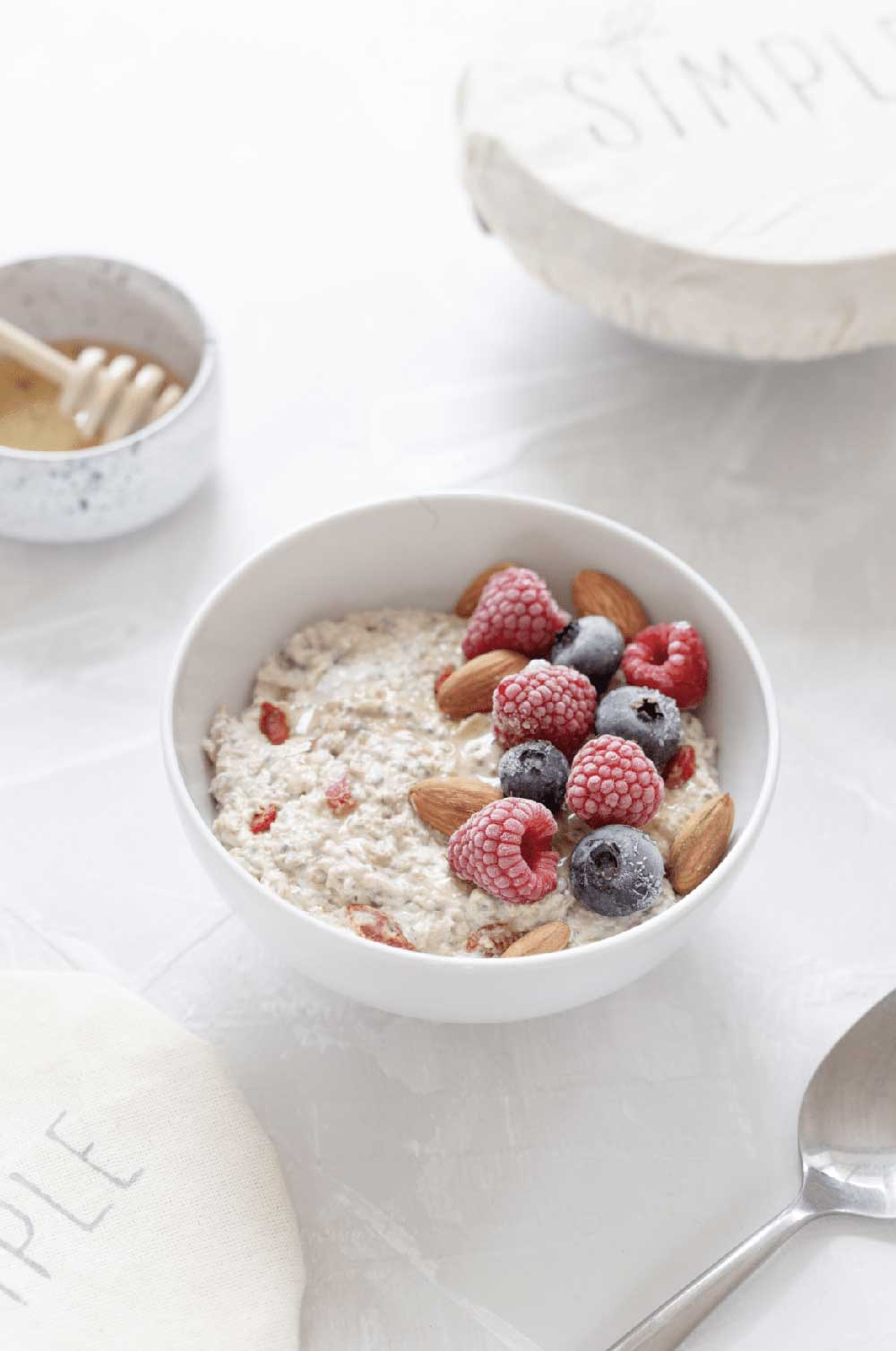
- Combine oats, basil seeds, almond milk yogurt and cinnamon in a mason jar.
- Top with frozen fruit and nut butter.
- Store in the refrigerator overnight.
- Enjoy the next day!
Slow Sunday Morning Healthy Breakfasts
Ingredients
Method
- Preheat oven to 350 F.
- Combine the egg, yogurt. and salt in a medium size bowl and whisk it until blended.
- Fold in the almond flour, baking powder, cheese, garlic powder and scallions.
- Scoop mixture onto parchment lined baking sheet.
- Bake at 350 for 15 minutes, until the tops are golden brown.
- Serve immediately or wrap and store in freezer.
Ingredients
Method
- Preheat your waffle maker. Mix all of the ingredients in a bowl. Pour the batter into the waffle maker.
- When cooked, serve immediately with pure maple syrup or fruit compote.